Knowledge
One of the most comprehensive legal corpora in the Arab world — produced, validated and structured for over a century.
For over a century and across six generations, SADER has structured, verified and delivered the legal knowledge of the Arab world — building an institution made to endure, adapt and lead.
The first bookstore in Lebanon
First law journal in the Arab world
Promoting innovation through research
Launch of the e-Lebanon Laws Collection
Transition to a regional publisher
A new era of SADER
Since it is the duty of every individual to know the laws of their country, the most sacred way we can serve the national project is by disseminating those very laws and regulations.
One of the most comprehensive legal corpora in the Arab world — produced, validated and structured for over a century.
Making the law usable: across languages, formats, channels and legal systems, ready for application.
A family-governed institution serving lawyers, scholars, institutions and citizens across generations.

From content and research to technology and cultural production, SADER covers the full lifecycle of legal knowledge.

Authoritative legal knowledge, built to be used. SADER has been producing and validating legal content for over a century, accumulating one of the most comprehensive legal corpora in the Arab world, and the editorial expertise to transform fragmented legal materials into structured, reliable, usable knowledge. Accurate, contextualized, comparable, and ready for application across diverse legal systems.
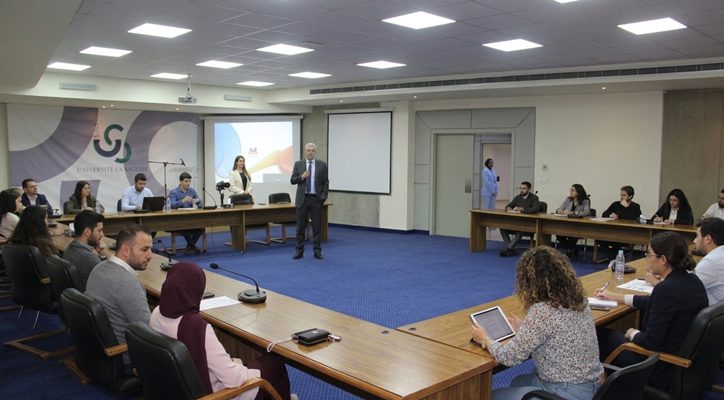
Developing legal professionals through structured learning and knowledge transfer. The quality of a legal system depends on the people who operate it. SADER designs and delivers structured education programs that strengthen professional competencies and advance legal practice, bridging theory and practice in a rapidly evolving landscape, and drawing directly on its institutional expertise and content depth.

Law doesn't just cross languages. It must cross legal systems. Translating legal content is not a linguistic exercise. A term that works in one jurisdiction may carry entirely different legal weight in another. SADER's practice combines linguistic precision with deep legal expertise and proprietary multilingual glossaries developed over decades. Lawcalization is SADER's term for this process: not just translating law, but adapting it, ensuring content is linguistically correct, legally aligned, jurisdiction-aware, and fully usable across different legal systems.
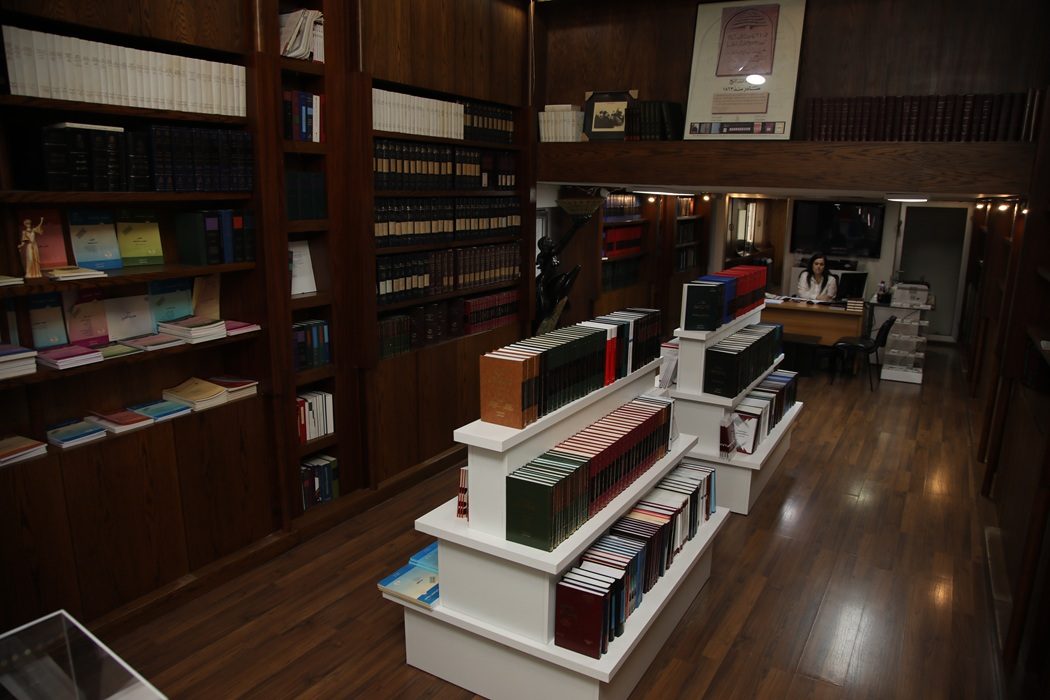
Delivering legal knowledge across formats, channels, and markets. SADER manages the full publishing lifecycle for legal content, from manuscript to final output, across print and digital environments. This is the infrastructure through which legal knowledge reaches the people who need it, in the format they need it, at the scale they require.

Preserving law as living memory. Law is not only a system of rules. It is a record of how societies have chosen to govern themselves. Rooted in a legacy dating back to 1863, SADER is a long-standing custodian of legal thought, tradition, and institutional memory in the region. This practice area reflects that responsibility: preserving legal heritage as a living body of knowledge, and transforming it into enduring works of historical, intellectual, and cultural value.
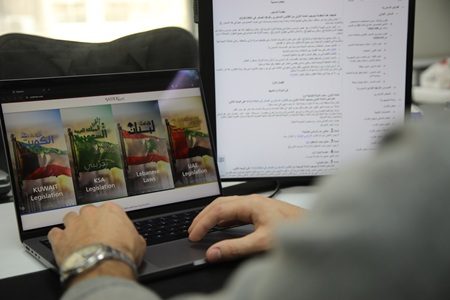
Transforming legal data into actionable intelligence. Since 1999, SADER has been at the forefront of legal technology in the region, among the first to digitize a significant portion of its content and build the structured corpora that underpin today's advanced legal intelligence infrastructure. That head start is now a defining advantage: decades of deliberate investment in data, structure, and systems that competitors cannot replicate overnight. Today, SADER develops technology-enabled intelligence systems that transform structured legal content into usable, searchable, and interconnected data.
A family of specialised platforms extending SADER’s reach across research, technology and culture.

The non-profit arm — preserving a 160-year legal archive and opening it to the public through education and access.
Where SADERLEX makes law searchable, LAITRON turns it into generative intelligence: it transforms trusted legal knowledge into actionable information across jurisdictions.
LAITRON supports advanced research, multilingual legal translation, summarization and AI-supported legal drafting, with one essential condition: every output is grounded in SADERLEX content, backed by sources and traceable to its origin. This grounding is what distinguishes LAITRON from general AI tools: it does not generate from the open internet or rely on guesswork, but on a closed base of documented law.
Designed specifically for civil-law systems and the Arab legal environment, LAITRON covers several countries across the Middle East, including Lebanon, the United Arab Emirates, Saudi Arabia and Kuwait. It is built for law firms, institutions and governments, operating within secure private infrastructure as the intelligent foundation for legal knowledge in MENA.
SADERLEX is the digital expression of a legal publishing tradition that began in 1863 and continued without interruption across six generations of the Sader family. In 1921, Youssef Sader compiled the first organized legal codes in the Levant, covering Lebanon and then Syria, forming the foundation of the classification work SADERLEX continues to develop today.
Today, SADERLEX is built on a verified collection of more than one million classified legal documents, bringing together legislation, case law, international treaties, advisory opinions and legal studies from several Arab countries in one unified, interconnected system. It also includes a specialized layer of Arab legal doctrine, providing authoritative interpretation alongside primary sources. Every document is indexed, linked and updated regularly to reflect the law’s ongoing development.
Designed specifically for Arab legal systems, SADERLEX serves as the digital reference infrastructure for law in the region: more than a century and a half of legal knowledge, available in searchable form.
Details for ALEKSY coming soon.
The Youssef Sader Foundation for Legal Culture is the non-profit arm of SADER’s institutional mission. Founded in 2018, it was created to return the family’s legal archive of more than a century and a half to the public through preservation, education and engagement with the wider legal community.
The Foundation protects rare legal materials dating back to the late nineteenth century and reactivates them through focused initiatives: open access to the Lebanese Official Gazette, digital legal platforms for judicial bodies and regional forums on the rule of law and legal innovation. It serves the public interest in law itself: its history, accessibility and future.
Working at the intersection of heritage and knowledge transfer, the Foundation contributes to the continuity of legal culture across MENA, connecting with today’s practitioners and with the generations that will shape the law in the future.
Six generations of annotated codes, court compendia and reference works — published across Arabic, French and English. Each volume carries the SADER imprint of authority, drawn from a catalogue that has grown without interruption since 1863.
Explore the library Court Compendium
Decisions of the Plenary Assembly of the Court of Cassation, 2019
Court Compendium
Decisions of the Plenary Assembly of the Court of Cassation, 2019
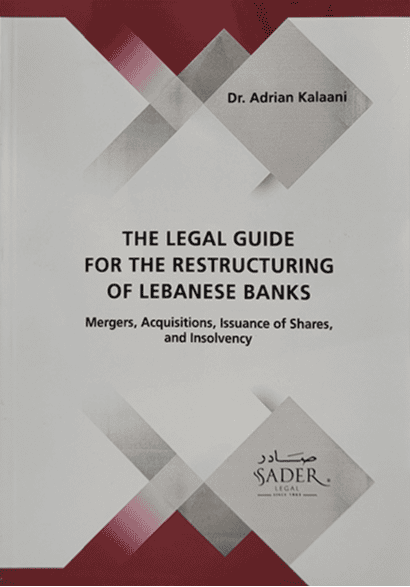 Banking & Finance
The Legal Guide for the Restructuring of Lebanese Banks
Banking & Finance
The Legal Guide for the Restructuring of Lebanese Banks
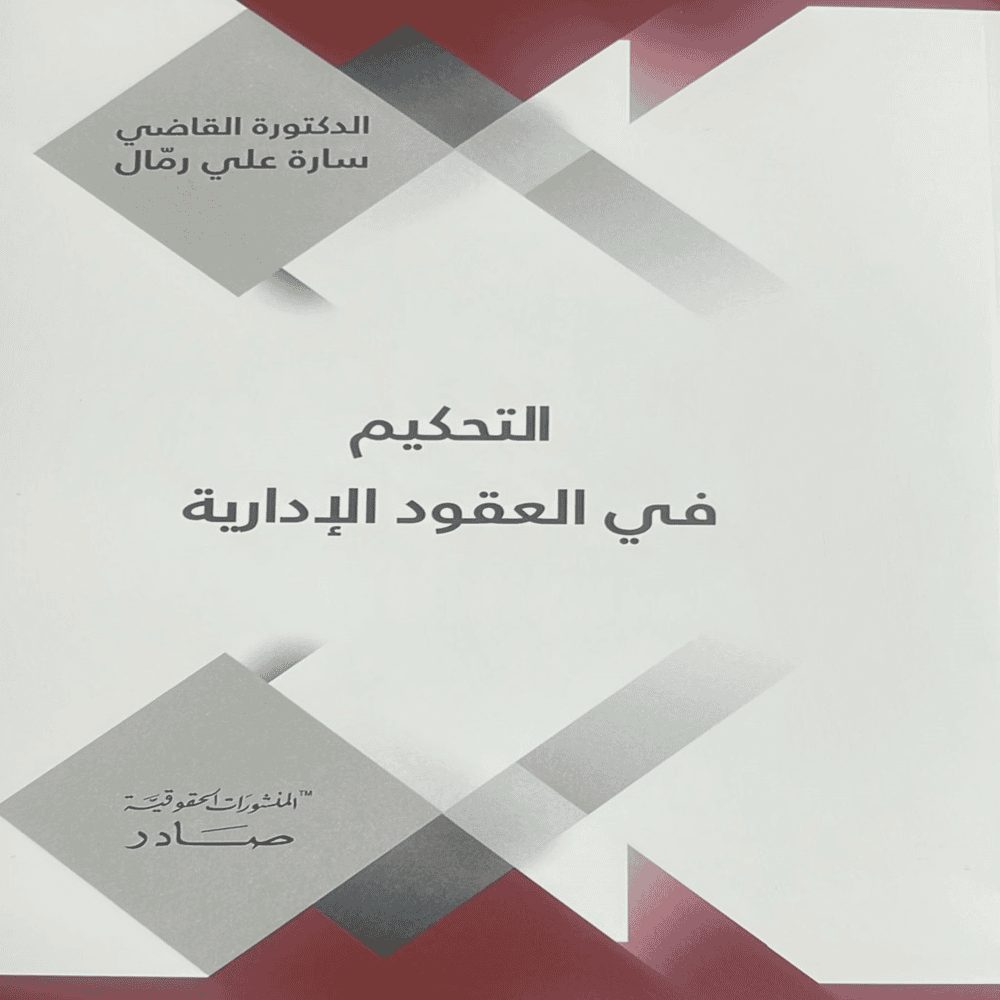 Arbitration
 in Administrative Contracts
Arbitration
Arbitration in Administrative Contracts
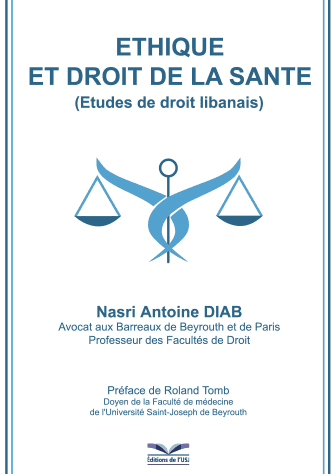 Health Law
Éthique et Droit de la Santé
Health Law
Éthique et Droit de la Santé
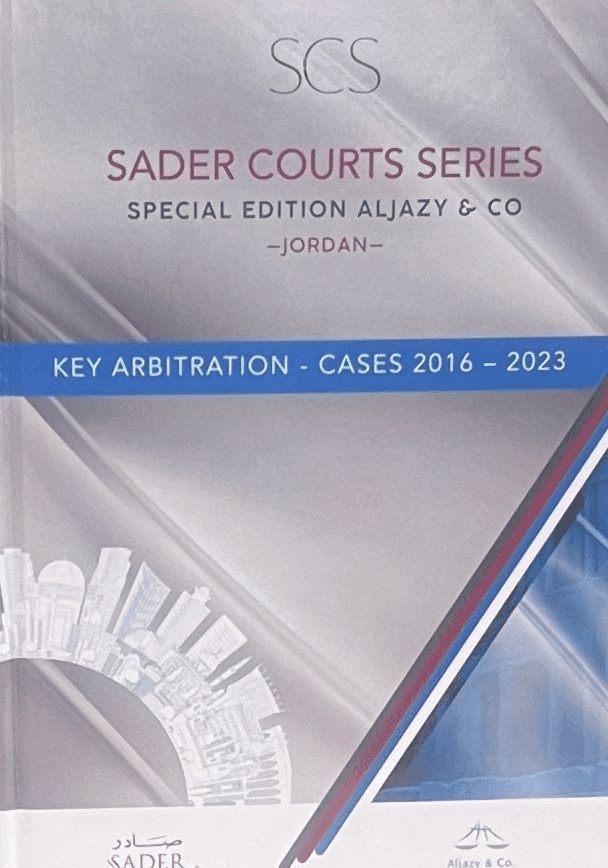 Arbitration
SADER Courts Series — Key Arbitration Cases in Jordan
Arbitration
SADER Courts Series — Key Arbitration Cases in Jordan
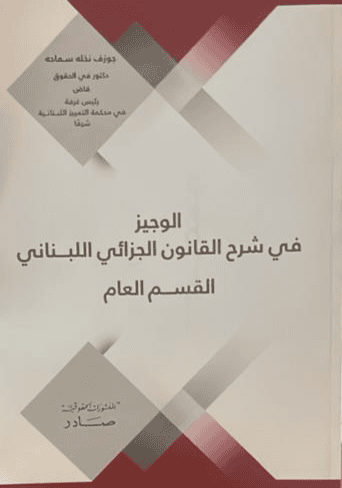 Criminal Law
A Concise Commentary on the Lebanese Criminal Code — General Part
Criminal Law
A Concise Commentary on the Lebanese Criminal Code — General Part
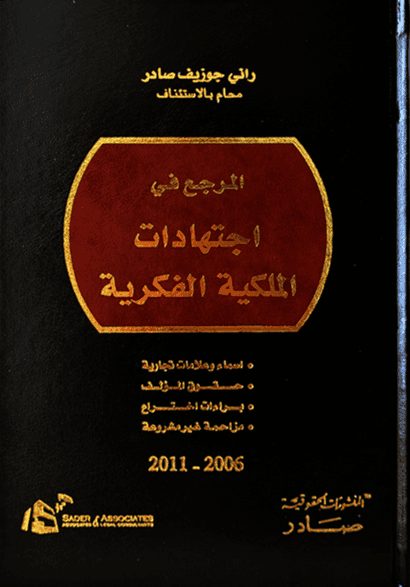 Intellectual Property
The Reference in Intellectual-Property Jurisprudence, 2006–2011
Intellectual Property
The Reference in Intellectual-Property Jurisprudence, 2006–2011
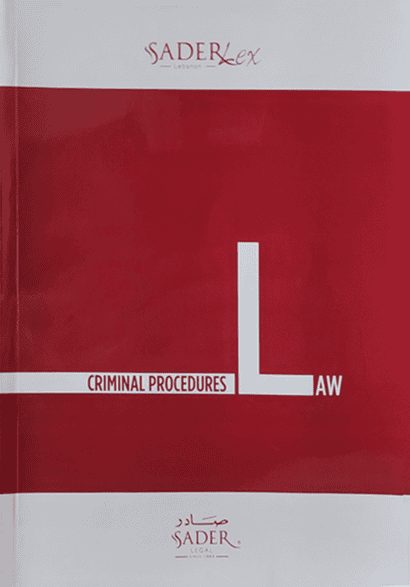 Codes in Translation
Criminal Procedures
Codes in Translation
Criminal Procedures
 Law & Governance
Sludge — What Holds Us Back, and What Can Be Done
Law & Governance
Sludge — What Holds Us Back, and What Can Be Done
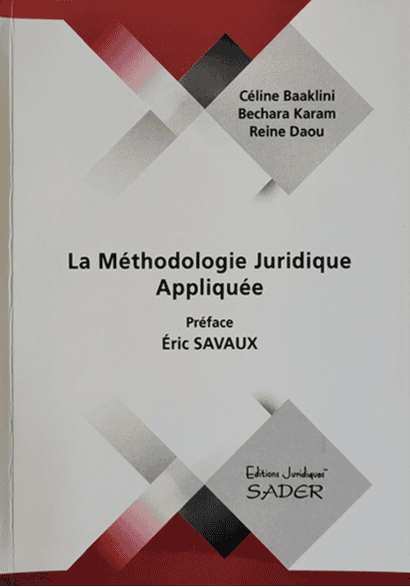 Legal Method
Applied Legal Methodology
Legal Method
Applied Legal Methodology
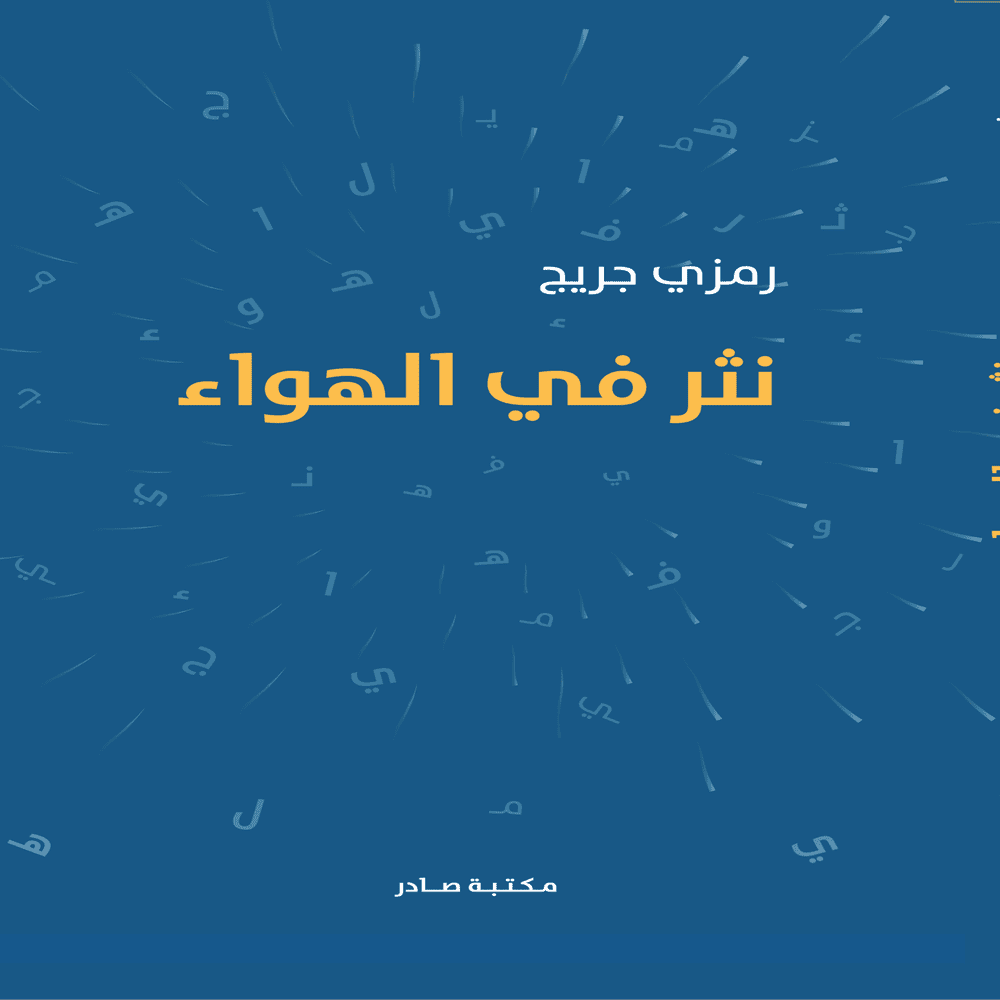 Essays & Constitution
Prose in the Air
Essays & Constitution
Prose in the Air
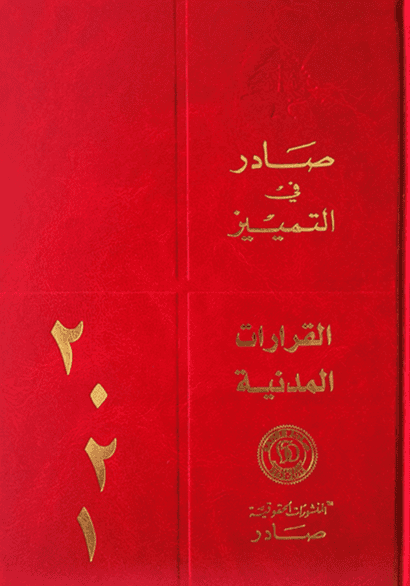 Court Compendium
Decisions of the Civil Court of Cassation, 2021
Court Compendium
Decisions of the Civil Court of Cassation, 2021
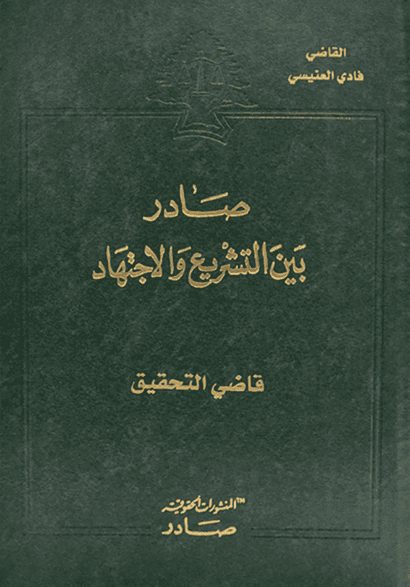 Criminal Procedure
The Investigating Judge
Criminal Procedure
The Investigating Judge
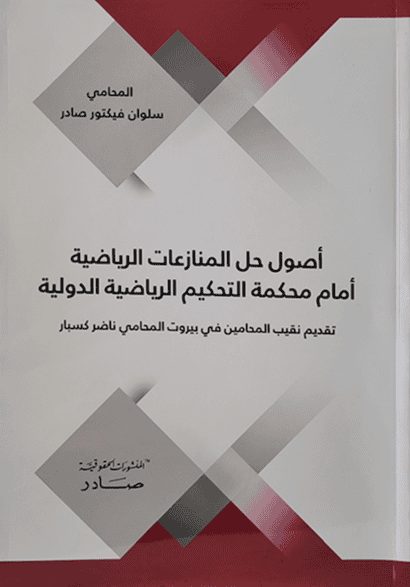 Sports Law
Resolving Sports Disputes before the CAS
Sports Law
Resolving Sports Disputes before the CAS
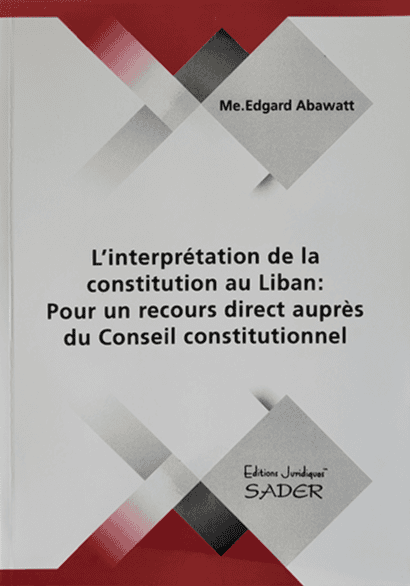 Constitutional Law
L’Interprétation de la constitution au Liban
Constitutional Law
L’Interprétation de la constitution au Liban
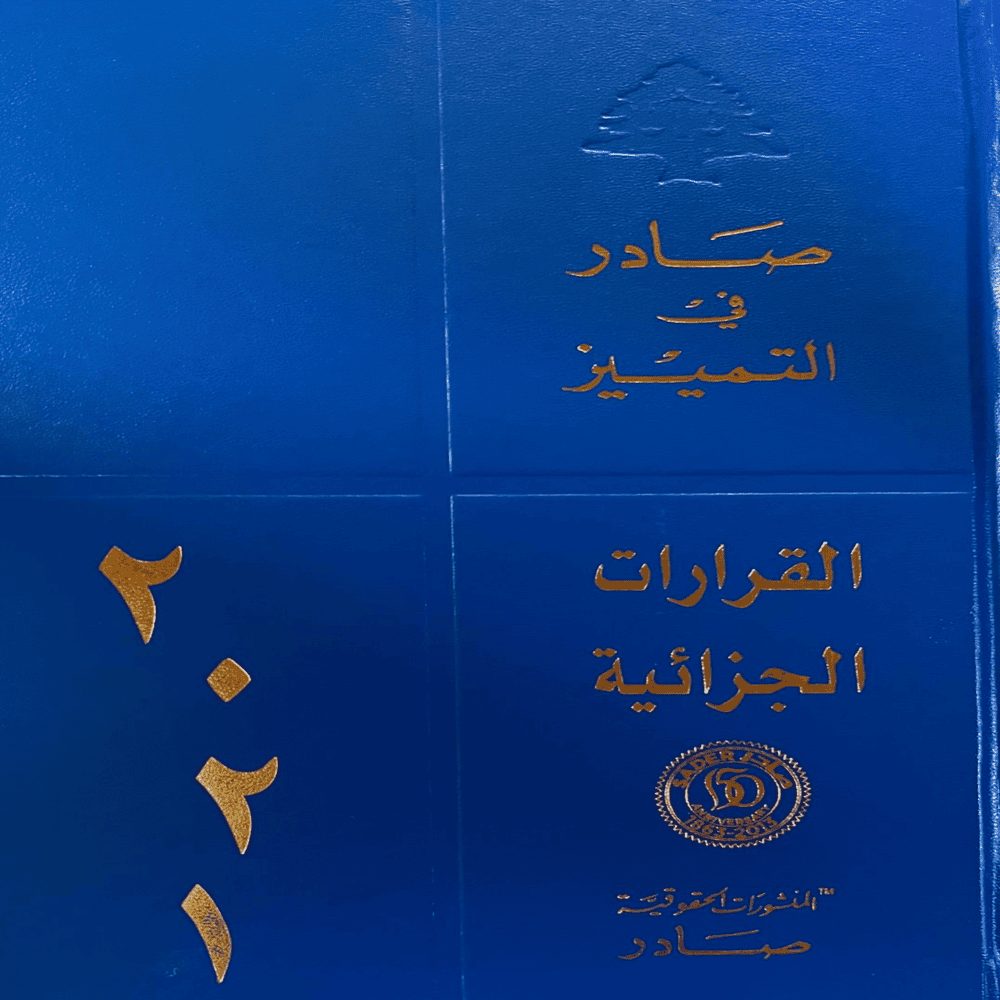 Court Compendium
Decisions of the Criminal Court of Cassation, 2021
Court Compendium
Decisions of the Criminal Court of Cassation, 2021